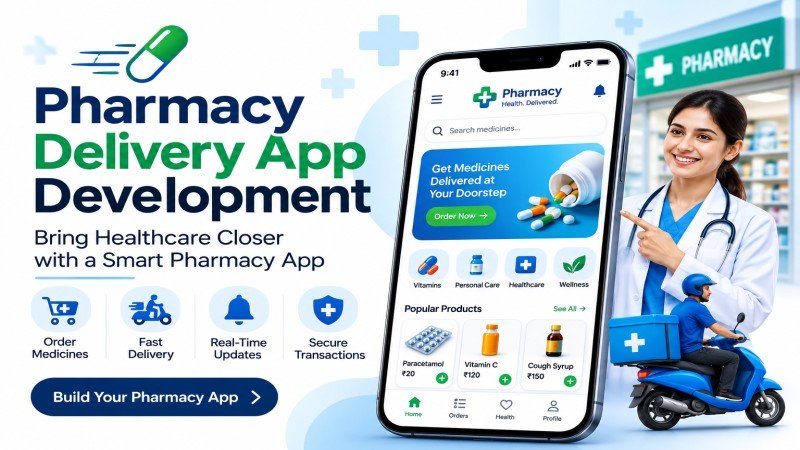
The healthcare industry is rapidly adopting digital technologies to make medical services more accessible and convenient. One significant development is the growth of online pharmacy services, which allow customers to order medicines and healthcare products through mobile applications. Instead of visiting a pharmacy physically, customers can browse available products, upload prescriptions, make payments, and receive deliveries at their preferred locations.
This changing consumer behaviour has created new opportunities for pharmacies, healthcare startups, and entrepreneurs. Investing in Pharmacy Delivery App Development enables businesses to establish an online presence, simplify medicine ordering, and improve customer service.
However, building a successful pharmacy application requires more than an attractive interface. It needs secure payment facilities, prescription management, inventory tracking, delivery coordination, and appropriate regulatory safeguards. This blog explores the essential features and business benefits of developing a pharmacy delivery application.
What Is Pharmacy Delivery App Development?
Pharmacy delivery app development involves creating a digital platform that connects customers with pharmacies and enables them to order medicines and healthcare products online.
A typical pharmacy delivery application may include three main components:
Customer Application: Allows users to search for medicines, upload prescriptions, place orders, make payments, and track deliveries.
Pharmacy or Seller Panel: Helps pharmacy owners manage products, verify prescriptions, update inventory, and process orders.
Admin Dashboard: Enables administrators to manage users, pharmacies, orders, payments, delivery activities, and application performance.
Some applications also include a dedicated delivery partner interface to manage assigned orders and update delivery status.
Essential Features of a Pharmacy Delivery App
A feature-rich application improves convenience for customers while helping pharmacy businesses manage their operations efficiently.
1. User Registration and Secure Login
Customers should be able to create accounts using their mobile numbers, email addresses, or other supported authentication methods. Secure login systems help protect personal information and provide a personalised experience.
2. Medicine Search and Product Categories
An effective search feature allows customers to find medicines using product names, categories, or other relevant information. Filters can help users explore healthcare products, wellness essentials, and other pharmacy items.
The application should also display accurate product information, availability, pricing, and relevant usage details.
3. Prescription Upload and Verification
Prescription management is one of the most important features of a pharmacy application. Customers should be able to upload clear prescription images or supported document formats.
Authorised pharmacy personnel must review prescriptions and verify their validity before processing prescription-required medicines. The application should support appropriate safeguards against unauthorised purchases.
4. Shopping Cart and Secure Payments
A shopping cart allows users to review selected products, modify quantities where permitted, and confirm orders. Integration with secure payment gateways can support online payment options.
Depending on the business model and applicable regulations, other payment methods may also be offered.
5. Real-Time Order Tracking
Customers appreciate knowing when their medicines will arrive. Order tracking allows users to view order progress, from confirmation and pharmacy processing to dispatch and delivery.
Notifications can keep customers informed about important order updates.
6. Inventory Management
An inventory management system helps pharmacies monitor product availability, stock levels, and expiry dates. Automated stock updates can reduce manual work and help prevent orders for unavailable products.
7. Customer Support and Notifications
In-app chat, customer support requests, and automated notifications help users resolve queries and receive timely information.
Notifications may include order confirmations, payment updates, prescription verification status, and delivery alerts.
Business Benefits of Pharmacy Delivery App Development
Developing a pharmacy delivery application can offer several advantages to businesses operating in the healthcare and pharmaceutical retail sectors.
1. Wider Customer Reach
A digital pharmacy platform allows businesses to serve customers beyond their immediate physical store location, subject to delivery coverage and applicable licensing requirements. This can help pharmacies expand their customer base and explore new markets.
2. Improved Customer Convenience
Customers can browse products, submit prescriptions, and place orders without visiting a store. This is particularly useful for people with busy schedules and those who face difficulties travelling to pharmacies.
3. Better Operational Efficiency
Digital order management, inventory tracking, payment processing, and delivery coordination can reduce repetitive administrative tasks. This helps pharmacy staff manage daily operations more effectively.
4. Increased Customer Retention
Features such as order history, reminders, personalised offers, and convenient reordering can encourage customers to continue using the platform.
For medicines requiring recurring purchases, timely reminders can improve convenience. Such features should be designed responsibly and should not replace professional medical advice.
5. Data-Driven Business Decisions
Application analytics can help businesses understand customer preferences, frequently ordered products, seasonal demand, and purchasing patterns. These insights support better inventory planning and business strategies.
6. Improved Brand Visibility
A dedicated mobile application gives pharmacy businesses another digital channel through which customers can discover their services, explore products, and interact with the brand.
Important Considerations Before Developing a Pharmacy App
Since pharmacy applications deal with medicines and sensitive customer information, businesses must consider regulatory compliance and security from the beginning.
Important considerations include:
Regulatory Compliance: Follow applicable pharmacy, drug sale, prescription, and e-pharmacy requirements in the operating region.
Data Privacy: Protect personal and health-related information through appropriate security controls.
Secure Payments: Use reliable payment gateways and secure transaction practices.
Prescription Verification: Establish a proper process for reviewing prescriptions and restricting unauthorised medicine sales.
Inventory Accuracy: Maintain updated stock information and monitor medicine expiry dates.
Scalable Architecture: Build an application that can support increasing orders, users, and business requirements.
Professional development planning helps ensure that these requirements are considered throughout the application lifecycle.
Why Choose Kriti Digital Solutions for Mobile App Development?
Building a pharmacy delivery application requires a combination of technical expertise, user-focused design, and an understanding of business operations.
Kriti Digital Solutions can help businesses explore customised Mobile App Development solutions based on their specific requirements. From planning application features and designing user interfaces to developing integrations and testing functionality, a structured approach can help transform a business idea into a practical digital platform.
The right development strategy should focus on security, usability, performance, and future scalability.
Conclusion
Pharmacy delivery applications are transforming how customers access medicines and healthcare products. They provide convenience to users while helping pharmacy businesses improve order management, inventory control, customer engagement, and operational efficiency.
Successful pharmacy delivery app development requires carefully selected features, secure technology, prescription verification, and compliance with applicable regulations. Businesses that invest in reliable and user-friendly digital solutions can strengthen their market presence and adapt to the changing expectations of healthcare consumers.
With professional mobile app development, pharmacies can build a digital platform that supports efficient operations and delivers a more convenient customer experience.